【Film Photos】 The Ultimate Film Developing Guide: Prices, Processing Time, Scanning, and Storage
Foreword
You just finished shooting a roll of film—what’s next?
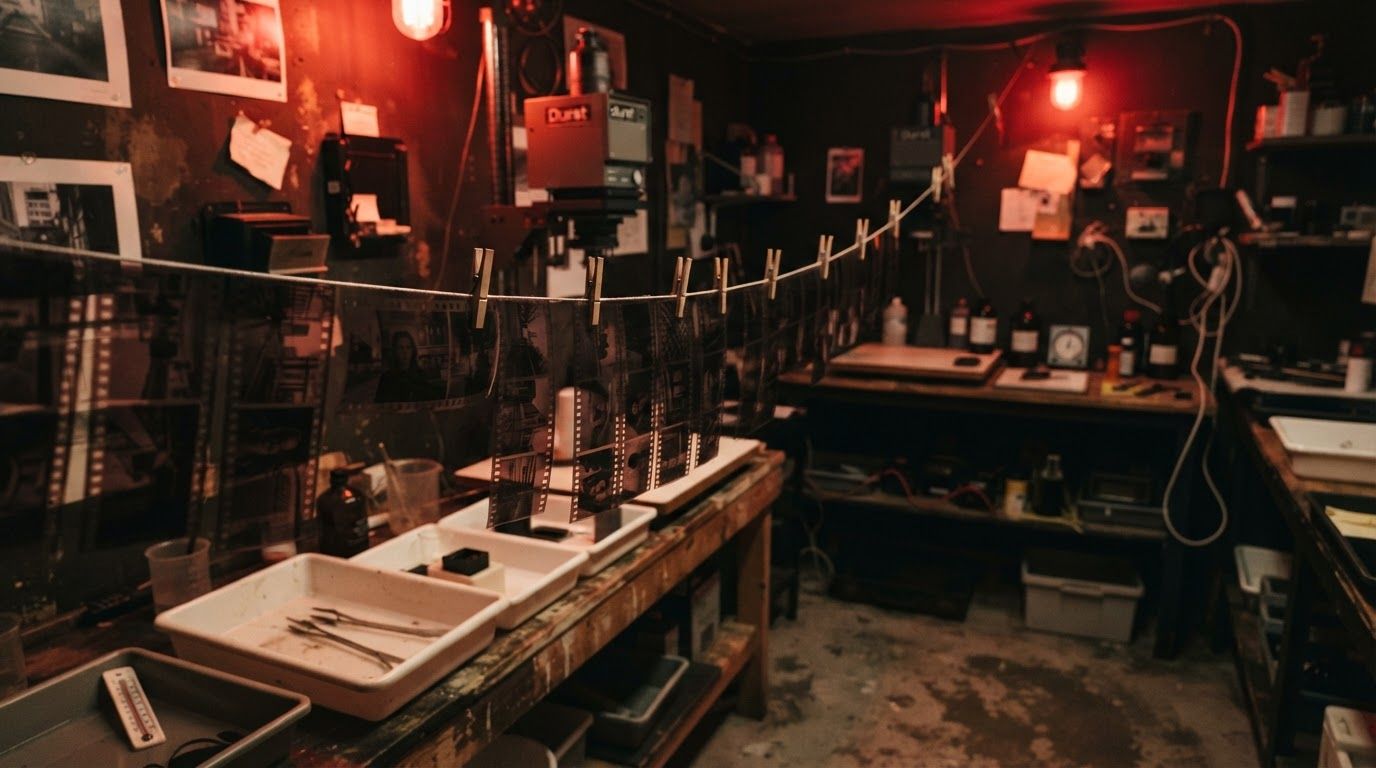
Film photos are images captured on a roll of photographic film using a photochemical process. When you press the shutter, the image is quietly stored on the film. It only truly appears after it is developed or scanned. This article will explain everything you need to know: film types, the developing process, prices, and how to preserve your photos for a long time in Hong Kong’s humid environment.
If you haven't bought a camera yet and want to know which one is best for beginners, you can first read our beginner's guide to film cameras.
1. What is film photography?
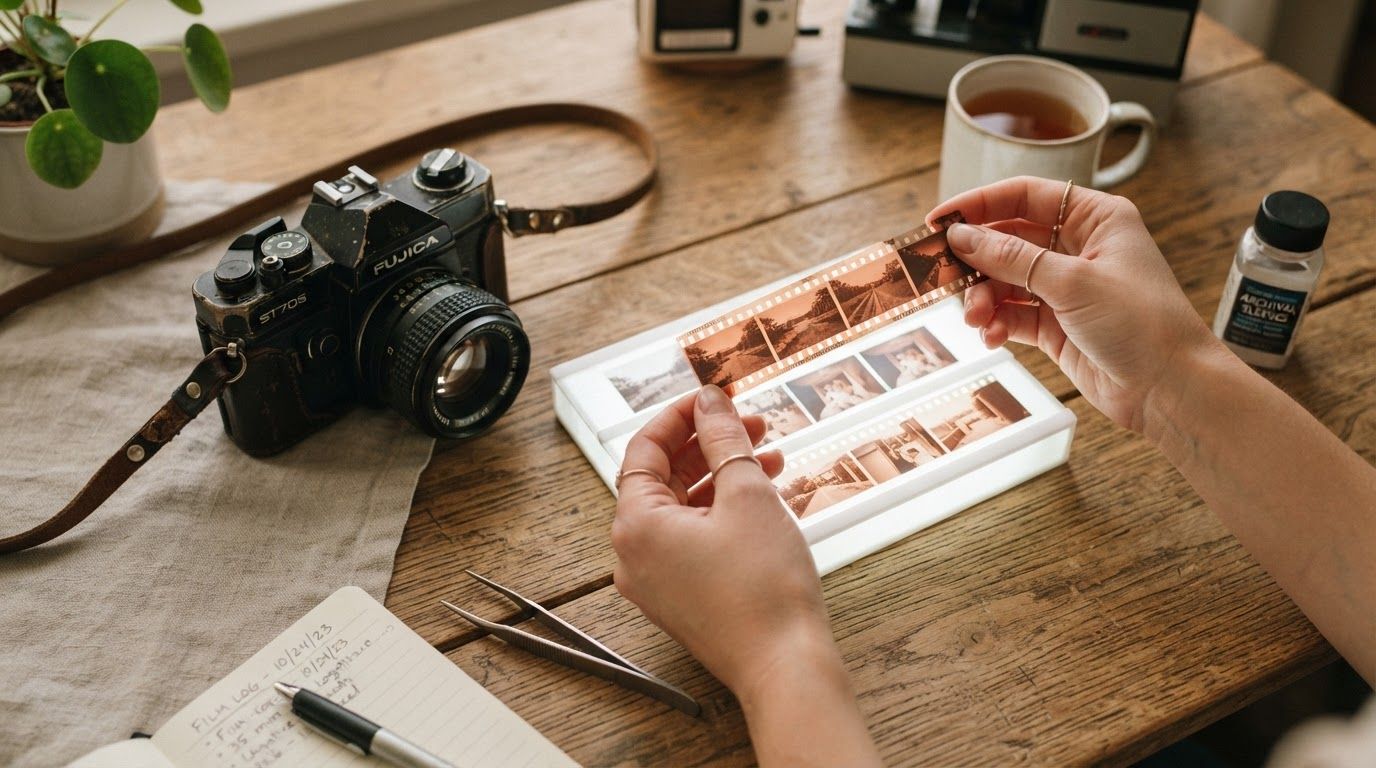
Film photos are taken using light-sensitive rolls of film. Light passes through the lens and hits the film, creating an invisible "latent image." It only becomes a visible image after being treated with chemical developers.
The most fundamental difference between film and digital photography is that "shooting" and "viewing" are two separate steps. You cannot check your results immediately. A roll of film only has about 20 to 30+ shots, meaning every click of the shutter has a real cost. Because of this, film photographers tend to compose their shots more carefully and think twice before shooting. This mindful approach is exactly why many people are returning to film.
2. What are the types of film?
Film is usually categorized by two things: Format (135, 120) and Film Type (Color Negative, Black & White, Color Positive).
| Format | Common Name | Shots per Roll | Common Uses |
|---|---|---|---|
| 135 | 35mm Film | 24 to 36 shots | Standard film cameras, disposable cameras |
| 120 | Medium Format | Depends on camera (8–16 shots) | Medium format cameras, higher detail |
| Film Type | Developing Process | Features |
|---|---|---|
| Color Negative | C-41 | Most common, highly forgiving, easy to develop |
| Black & White | B&W Process | Great contrast and distinct grain |
| Color Positive (Slide Film) | E-6 | Rich colors, requires very accurate exposure |
A key number when buying film: ISO (Film Speed). ISO 200–400 is great for outdoor daylight; ISO 800 or above is better for indoors and evenings.
3. Why is film photography popular again?
Film gives you three things that digital photos struggle to replicate: unique colors and grain, a sense of ritual, and a physical object you can hold in your hands.
- Unique Texture: The film grain, color depth, and highlight transitions look completely different from photos heavily edited by smartphone algorithms.
- The Return of Ritual: You can't reshoot or preview. Every frame is taken seriously.
- Physical Copies: Photos and negatives are real objects. You can look back at them decades later without worrying about digital platforms or file formats becoming outdated.
- Social Media Trend: Film tones have created their own aesthetic on Instagram and Threads, attracting a new generation of beginners.
4. What is the film developing process?
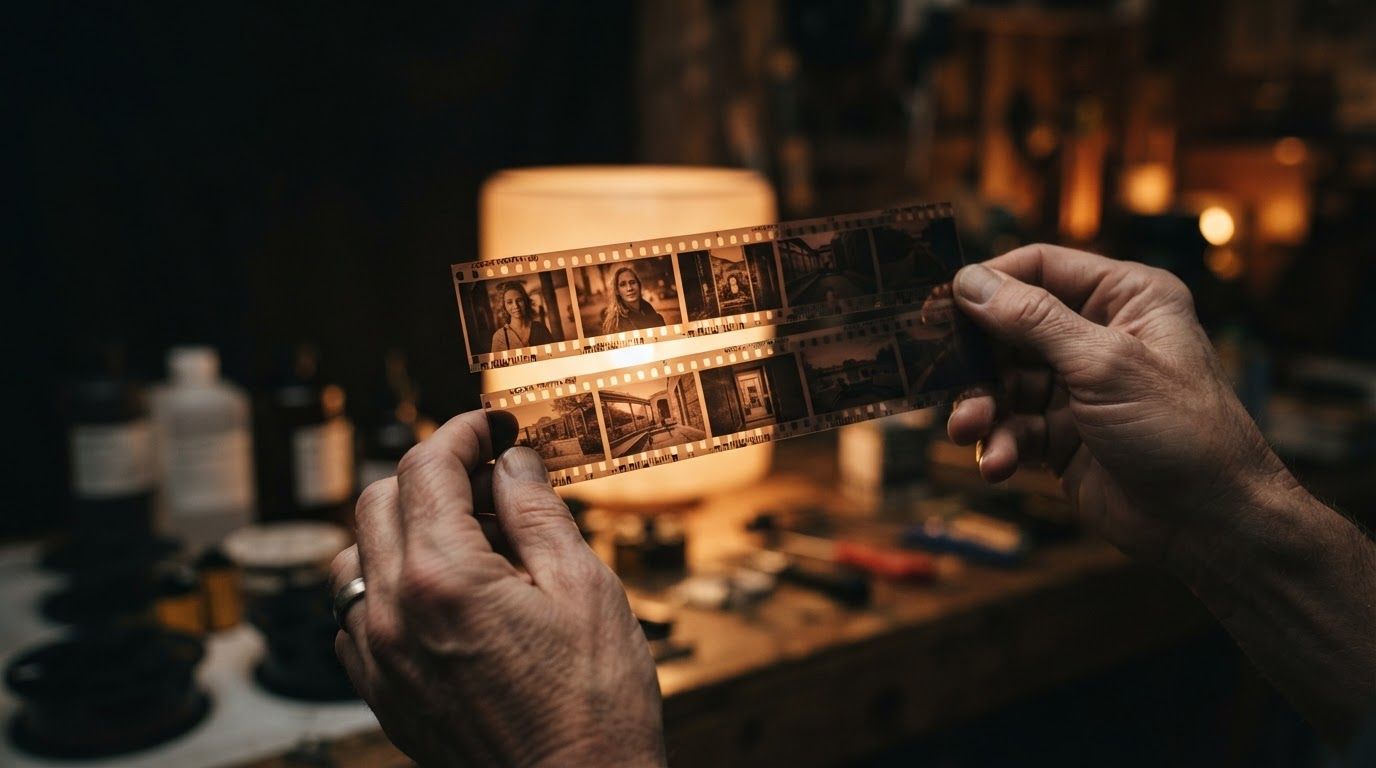
From finishing a roll to getting your photos, there are four steps:
-
Step 1:Finish the roll and rewind.
You can develop a roll before finishing it, but you won't get a refund for the unused shots, so it's best to finish the whole roll. If using a reusable camera, make sure the film is completely rewound into the canister (the rewind crank will feel loose) before opening the back. If you open the back mid-roll, the film will be exposed to light and ruined. For disposable cameras, just bring the whole camera to the shop.
-
Step 2:Drop off for developing.
Developing is a chemical process that turns the invisible image into a visible negative. This step cannot be undone and is the core of the process. You can drop off your film at over 50 Fotomax stores and FOTOMETA locations in Hong Kong without an appointment.
-
Step 3:Choose your output.
Output Method What You Get Who It’s For Printing Physical photos People who want physical copies, gifts, or photo albums Digital Scanning High-quality JPG files People who want to share on social media or keep digital backups Print + Scan Both The choice for most users -
Step 4:Pick up and get cloud photos.
If you choose digital scanning, the electronic files will sync directly to your Fotomax App account once developing is done. You can open your phone to "unbox" your photos, save them with one click, and share them instantly. Physical photos can be picked up at designated Fotomax stores (e.g., Pioneer Centre in Mong Kok) in as fast as 1 hour. For other branches, it generally takes 2 days to receive the digital files.
When choosing a developing service, pay attention to the scanning method, file delivery, and pick-up arrangements. Fotomax offers developing, printing, and scanning services so you can keep physical photos, negatives, or digital files based on your needs.
5. How much does film developing cost?
Fotomax film developing starts at HK$48. The price depends on the film type and the output method you choose.
| Service | Price |
|---|---|
| Develop Only | HK$48 |
| Develop + Digital Scan | HK$98 |
| Develop + Digital Scan + Print | HK$148 |
6. How do you digitize film photos?
There are two situations: For new, undeveloped film, you can simply add scanning to your developing order. For old, already developed negatives, you can use a film scanning service to digitize them one by one.
Negative scanning uses professional film scanners, which offer much higher resolution than taking a picture of the negative with your phone, preserving the original details and colors. For boxes of old photos and albums at home, please refer to our photo scanning service guide: [To be filled: Internal Link — Photo Scanning Article].
7. How should you store film and photos?
Three golden rules: Keep them dry, keep them away from light, and make digital backups. Hong Kong is humid all year round, making it a high-risk environment for moldy photos and negatives.
- Put negatives back into their dust-proof sleeves and store them in a dry box or airtight container with desiccants (moisture absorbers).
- Avoid exposing physical photos to direct sunlight for long periods to prevent fading.
- The safest method is to scan a digital backup—keep both the files and the physical copies safe.
Frequently Asked Questions (FAQ)
Q1. How long can I wait to develop my film after shooting it?
It is best to develop it as soon as possible. The invisible image on the film degrades over time. Waiting a few months usually has a minor impact, but waiting several years can cause color shifts and a drop in contrast.
Q2. Can I still use expired film?
Yes, but the film speed (ISO) will drop, and the colors will shift. Some photographers actually love this unpredictability. However, if you want stable and reliable results, use unexpired film.
Q3. Will airport X-ray machines ruin my film?
Standard carry-on luggage X-ray machines usually have a minor effect on film under ISO 800. However, the newer CT scanners can ruin your film. The safest way is to keep your film in your carry-on bag and politely ask for a manual hand-check. Never put film in your checked luggage.
Q4. How many photos can I take on one roll of film?
Standard 135 film usually has 24 or 36 shots. Disposable cameras usually have 27 or 39 shots. Half-frame cameras can double the number of shots.
Q5. Can very old film still be developed?
Yes, but the image quality and success rate depend on the film type, how it was stored, and how long it has been expired.
Color Negative (C-41) will have color shifts: The chemicals degrade over time, often resulting in heavy color shifts (like turning very green or purple), thicker grain in dark areas, and lower contrast.
Storage environment is the key: If stored in a hot, humid place for a long time, the film might be moldy or stuck together and cannot be developed. If kept in a cool, dry place or a fridge, the success rate is much higher.
Q6. Can I choose to only develop the film without printing?
Yes. Developing, scanning, and printing can all be done separately. However, developing is usually bundled with scanning, and package deals are cheaper.
Q7. How will I receive my scanned digital files?
If you choose the digital scanning service, the JPG files will sync to your Fotomax App account. You can view and save them directly on your phone for up to 3 months, or download them from the cloud.
Q8. Where can I buy and develop film?
Fotomax stores and FOTOMETA sell film and film cameras. You can also use our developing, scanning, and printing services. Before dropping off your film, you can check with the store staff regarding the types of film they process, prices, and turnaround times.
A Whisper from the Fotomax Editor
When many people receive their first batch of film photos, they might see light leaks, out-of-focus shots, or slight blurriness and think they are "failed shots." But in the world of film, these fleeting accidents are the most real and unique records of life.
You don't know the result when you press the shutter—and that is exactly what makes film so fascinating!